
Protect People & Property
Roof Snow Retention Systems Help
- Prevent dangerous “avalanching” of snow & ice
- Prevent ice “damming” build-up at roof’s edge
- Prevent damage to gutters & eaves
- Match snow retention to your roof type
- Provide durable, long-lasting protection
Keep Roof Snow In Its Place
Roof snow guards and snow fences are designed to help keep snow on your roof, helping to prevent sudden, potentially dangerous releases of snow and ice. These specially-designed metal devices are mounted directly to the roof structure, forming barriers and adding extra friction to keep snow in place until it can safely melt and dissipate.
Snow Guards and Roof Pitch
One factor in determining the quantity of snow guards necessary to hold snow on a roof is the pitch, or steepness of the roof. It is generally understood that snow doesn’t tend to avalanche on mountainsides on slopes less than 22 degrees. Between 22 degrees and 30 degrees snow can avalanche but it is not considered probable. Mountain slopes in excess of 30 degrees are considered somewhat likely to avalanche. Slopes in excess of 45 degrees are prone to avalanche.

What that means in roofing lingo:
On roofing products with a higher coefficient of friction like asphalt shingles, wood shakes, and rougher tiles, snow should behave much like mountainsides. Therefore, except in very high snow load areas, snow guards aren’t usually necessary to stabilize snow on roof slopes less than 30 degrees (7/12) and are usually not necessary at all on roof slopes less than 22 degrees (5/12). Snow guards should be considered on slopes in excess of 30 degrees (7/12) in moderate to high snow load areas. On roof slopes approaching 45 degrees (12/12) snow is very likely to slide and snow guards should be considered in areas where it is necessary to control snow slides. On steeper roofs, snow fences instead of snow guards, or a combination of both, may be necessary to achieve the snow retention desired.
Snow Stability Physics
The physics of mountainside avalanches are not directly applicable to roofs with a lower coefficient of friction like synthetic slate and shake, metal, natural slate and single ply low slope materials like PVC, TPO and EPDM membranes. On these roofs, snow can slide at pitches of less than 1/12. For these roof types, snow guards must be considered on all slopes that shed snow onto walkways, driveways or decks. On higher pitch roofs of these materials, snow guards may need to be applied in a layout that covers the entire roof area to stabilize the snow pack. (The layout will have a higher density of snow guards at the bottom of the roof area and a lower density of snow guards at the top of the roof area).
How we apply that to your specific situation:
At Kaleah Roofing LLC we understand snow dynamics and snow guard theory. We use state-of art snow guard calculator services to determines the quantity of snow guards per square based on many job-site factors. Snow load, roof type, exposure to wind and sun, the type of building, relative roof insulation and pitch are all considered. Once the quantity of snow guards per roofing square is determined, we take that information and develop a job-specific layout using those same services.
Systems by Roof Type


Roof Deicing & Ice Dam Prevention
Roof deicing products protect your roof by preventing ice dams, snow and ice buildup, and snow load related hazards. With the systems in the industry listed to melt snow and ice from under your roof covering, you can keep your roof safe without visible cables.

Installed Beneath Roofing Materials
- Low voltage systems listed for installation under roofing material.
- Ice free roof with no messy cables.
- Can be paired with our line voltage cables in gutters and downspouts.

Expert Insights Bring You the Perfect Solution
- Roof deicing tailored to your exact needs.
- Designed to climate and other factors to ensure effectiveness and efficiency.
- Combat ice dams, icicles, and more!
Heat Trace Cable
Line voltage heat tracing product can be either a mineral insulated cable or a self regulating cable. Our most common application for melting snow and ice accumulation in gutters and downspouts, but it can also be zig-zagged on roof eaves and valleys to provide a path for water to leave the roof. Typically these self regulating cut to length cables are used for these applications making installation a breeze. These products can be used in combination with our under roof deicing products to provide a path for water to the ground.
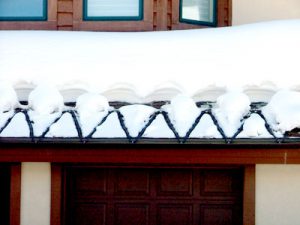
GutterMelt systems are maintenance free and can be customized to fit any application in any region. We take pride in creating customized solutions for our customers unique projects including customized activation methods and activation panels with built in GFEP protection.
How it Works
GutterMelt systems use either a fixed length mineral insulated cable or a cut to length self regulating cable. Cable output in watts/lineal foot is determined by application. Relay Panels and Contactor Panels are used to activate multiple circuits on one activation device to accomodate larger projects. Smaller systems can be powered directly from an activation device or a simple plug in kit.
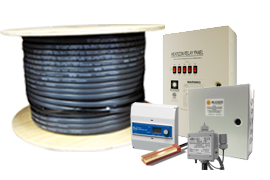
Reliable Deicing
Heat Cable products carry the power of a 5-10 year warranty at an economical price point for an professional industrialized cable.
Heat Cable Uses Include:
- Roof Eaves
- Roof Valleys
- Gutters
- Downspouts
- Pipe Heat Tracing
- Industrial Applications
- Commercial Applications
- Freeze Protection